
PARAGUAY DIGITAL NOMAD GUIDE 2026: TEMPORARY RESIDENCY, NO VISA NEEDED
Why Paraguay Appeals to Digital Nomads
Paraguay has quietly built one of the most attractive environments for remote workers in Latin America. The combination of low cost of living, territorial taxation, and minimal physical presence requirements creates a uniquely efficient base for digital professionals.
Key advantages for digital nomads in 2026:
- 0% tax on foreign-sourced income — Paraguay’s strictly territorial tax system means income earned from clients or businesses outside Paraguay is not taxed locally.
- No minimum stay requirement — Temporary residents are not legally required to spend 183 days per year in the country.
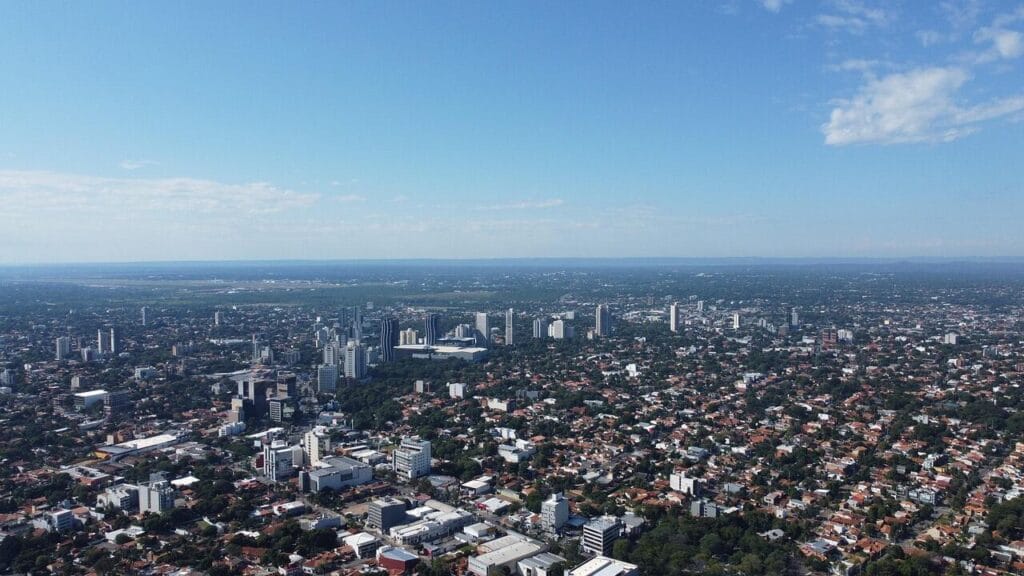
- Affordable cost of living — Asunción remains one of the most affordable capital cities in South America, with rents, food, and services at a fraction of European or North American costs.
- Fast residency processing — With proper legal assistance, temporary residency can be obtained in 4 to 8 weeks.
- Path to permanent residency and citizenship — Two years of temporary residency leads to permanent status, and three further years make you eligible for naturalization.
The Paraguay Digital Nomad "Visa" That Isn't a Visa
Paraguay introduced its current migration framework under Law No. 6984/2022. Unlike countries that have created dedicated digital nomad categories (Portugal, Costa Rica, Germany), Paraguay opted for a unified Temporary Residency permit that works exceptionally well for remote workers.
The practical difference is minimal. You receive an official residency card (cédula paraguaya), full banking access, and the legal right to reside and operate in Paraguay — without being required to prove local employment or locally-sourced income.

Requirements for Temporary Residency in Paraguay
Applying for temporary residency in Paraguay as a digital nomad requires a focused set of documents. Here is the standard checklist:
- Valid passport with at least 12 months of remaining validity
- Apostilled criminal background check from your country of residence
- Apostilled birth certificate
- Proof of financial means (bank statements, freelance contracts, or a declaration of income)
- Local address in Paraguay (hotel, rental, or Airbnb confirmation)
- Medical certificate issued by a licensed Paraguayan physician
- Application form and fees
Documents in languages other than Spanish must be officially translated by a sworn translator in Paraguay. All apostilles must be original or certified copies issued by competent authorities in the originating country.

Processing Timeline
The typical timeline from document preparation to residency card issuance breaks down as follows:
- Document apostille and preparation: 2–4 weeks (varies by country of origin)
- Submission at Dirección General de Migraciones: 1–2 weeks
- Provisional residency certificate: issued at submission, valid immediately
- Permanent cédula issuance: 4–8 weeks after submission
Working with a licensed immigration attorney significantly reduces the risk of document rejections and speeds up the overall process.
Can You Do It Remotely? The Power of Attorney Option
One of Paraguay’s most unique features is the ability to initiate — and in some cases complete — your residency process entirely remotely. Through a legally executed Power of Attorney, a licensed attorney based in Asunción can represent you before immigration authorities, submit documents on your behalf, and manage all administrative steps.
This makes Paraguay one of the few jurisdictions where a digital nomad can obtain full legal residency without ever boarding a plane — at least for the initial stages. Final collection of your cédula typically requires a brief in-person visit, though some procedures allow proxy collection as well.
Tax Implications for Remote Workers
Paraguay’s territorial tax system is its headline feature for digital nomads. The rule is straightforward: Paraguay taxes only income generated within its borders. If you are a freelancer working for clients in the US, EU, or anywhere outside Paraguay, that income is foreign-sourced and is not subject to Paraguayan personal income tax.
Income generated from local Paraguayan clients or business activities is subject to the standard flat rate of 10% (personal income tax / IRACIS).
It’s important to note that Paraguay’s tax treatment does not automatically exempt you from taxes in your country of origin. Countries with worldwide taxation systems (such as the US, for non-exempt citizens) require separate tax strategy. Seek professional advice to structure your situation correctly.

Banking for Digital Nomads in Paraguay
Access to a Paraguayan bank account is one of the most practical benefits of obtaining residency. Banks in Paraguay accept freelance income, online business revenue, and investment income as proof of financial activity.
With your temporary residency cédula and RUC (Registro Único del Contribuyente — Paraguay’s tax ID), you can open both personal and corporate accounts at local banks. Paraguay’s banking system accepts USD, EUR, and PYG deposits, and cross-border transfers are unrestricted.
The bank account opening process typically takes 2 to 4 weeks after residency is established and usually requires an in-person appointment.

The Path Forward: From Temporary to Permanent Residency
Temporary residency in Paraguay is valid for two years and is renewable. After holding temporary status for two years, you become eligible to apply for Permanent Residency — a 10-year permit that reduces physical presence requirements to one visit every three years.
After holding permanent residency for three years, you can apply for Paraguayan naturalization, which leads to citizenship and a Paraguayan passport — currently valid for visa-free or visa-on-arrival access to over 145 countries.
This makes Paraguay’s residency pathway one of the most efficient citizenship routes in Latin America for long-term oriented digital nomads and investors.
Is Paraguay the Right Base for You?
No. Paraguay does not have an immediate citizenship-by-investment program. The passport is the result of a naturalization process that requires effective residency and the fulfillment of specific conditions over at least three years.
Not directly. What SUACE allows is obtaining permanent residency from day one, meaning the three-year naturalization period begins sooner than it would on the standard route.
In 2026, the Paraguayan passport grants visa-free or visa-on-arrival access to more than 141 destinations, including all Schengen countries and the United Kingdom.
The constitution formally requires it, but in practice Paraguayan authorities do not actively verify whether the applicant retains their original nationality. Many naturalized citizens maintain dual citizenship without any issues.
Effective physical presence is a requirement evaluated during the process. Failing to meet it can invalidate the application or significantly delay the procedure.
At the Identification Department of the National Police of Paraguay, presenting the Letter of Naturalization issued by the Supreme Court of Justice.
Our related Articles
The only comprehensive English guide to SUACE Paraguay built from 4 official government documents. Exact...Read More
Paraguay's territorial tax system means 0% tax on all foreign-sourced income — from freelance work,...Read More
Paraguay and Panama are the two most-compared residency destinations in Latin America. In 2026, Paraguay...Read More
Paraguay has no official digital nomad visa — and that's an advantage. Its Temporary Residency...Read More
There is a misconception that comes up constantly among people interested in relocating abroad: the...Read More
In an era of increasing global volatility, the search for a secure "Plan B" has...Read More
Real estate investment in Paraguay has gained prominence in recent years, becoming an attractive destination for...Read More
There comes a point where it’s no longer just about making money, but about protecting...Read More
In recent years, Paraguay has positioned itself as one of the most accessible jurisdictions in...Read More
There are moments when a family starts considering important changes. Not out of extreme necessity,...Read More