

Paraguay Digital Nomad Visa 2026: What You Need to Know

Paraguay in 2026: the real alternative for location-independent professionals

Most people who search for a digital nomad visa for Paraguay found the country through a tax optimization community, a remote work forum, or a recommendation from someone who made the move. Paraguay has become a recurring topic in those circles for concrete reasons: a territorial tax system, a genuinely low cost of living, and a residency process that is more accessible than most South American alternatives. What the search does not tell you is that the exact label \u2014 digital nomad visa \u2014 does not exist in Paraguayan immigration law. This guide explains what does exist, whether it is better or worse than a standard nomad visa, and how the full process works for freelancers and remote workers who want a solid legal base in the country.

Paraguay Has No Digital Nomad Visa \u2014 and That\u2019s Actually Good News

Paraguay has not created any immigration category called a digital nomad visa, remote worker visa, or freelancer permit. Paraguayan immigration law primarily recognizes two categories for foreigners: temporary residency and permanent residency. There is no short-stay permit specifically designed for people working remotely from within the country.

This might seem like a setback for someone looking for a quick, low-commitment setup. In practice, the opposite is true. The nomad visas available in countries like Portugal, Spain, or Estonia are designed for one- to two-year stays, with high minimum income thresholds, complex paperwork, and the uncertainty of having to renew or leave when the visa period ends. Many of them also fail to resolve the tax problem: holders often continue paying taxes in their home country while living abroad.

Paraguay\u2019s temporary residency, by contrast, is built for people who want to establish a solid legal foundation in the country \u2014 not a temporary tourist arrangement. That means access to the local banking system, a Paraguayan national ID, the ability to open a company, and \u2014 most relevantly \u2014 eligibility for Paraguay\u2019s territorial tax system. Not having a trendy label does not mean not having options. It means having something structurally more valuable.

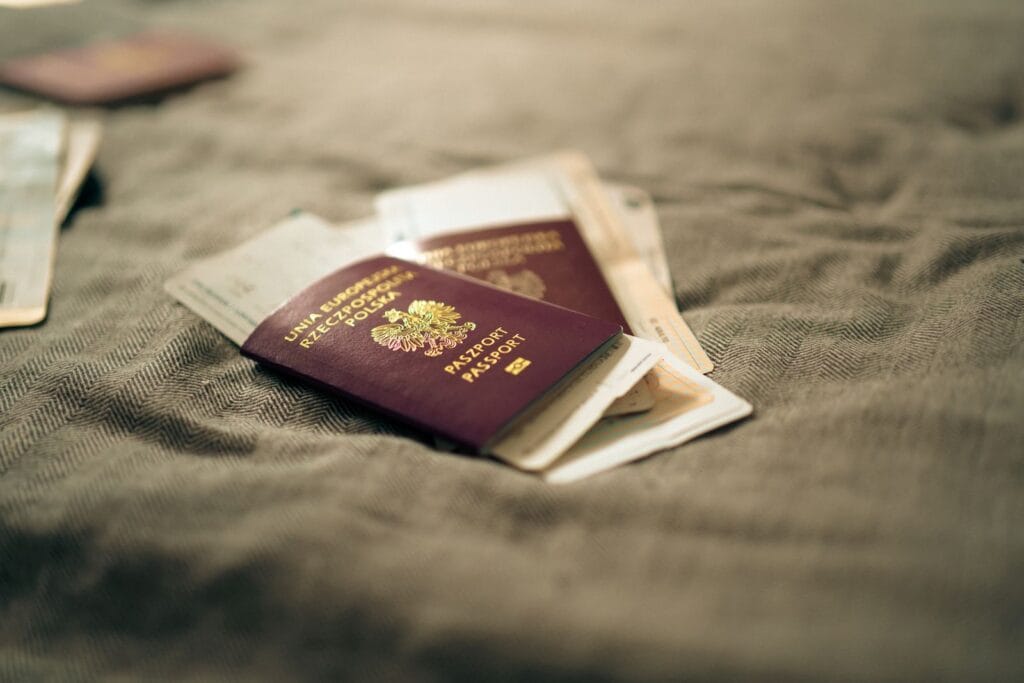
Passport and Travel Documents for Residency

What Does Exist: Temporary and Permanent Residency for Remote Workers

Paraguay\u2019s temporary residency is the immigration category used by the majority of foreigners settling in the country \u2014 freelancers, digital entrepreneurs, and professionals with international clients. It is granted initially for two years, renewable indefinitely, with no restrictions on income source or where you physically perform your work.

The core documents required are a valid passport with at least six months of remaining validity, an apostilled criminal background check from your country of origin or residence covering the last five years, apostilled civil status documents \u2014 birth certificate, marriage certificate if applicable \u2014 and proof of sufficient means of support. This last requirement can be met with bank statements, client contracts, passive income documentation, or proof of investment in Paraguay.

The process runs through Paraguay\u2019s Directorate General of Migration and requires physical presence in Asunci\u00f3n for at least one phase of the application. With complete, properly apostilled documentation submitted correctly, processing time is typically four to eight weeks. Upon approval, you receive a Paraguayan ID card \u2014 the key document that opens the local banking system and lets you operate normally in Paraguayan administrative processes.

After three years of temporary residency, you can apply for permanent residency, which has no expiration date. Permanent residency is the step before naturalization as a Paraguayan citizen, available after three additional years. Paraguay thus offers a complete migration path that goes far beyond what any conventional nomad visa can provide.

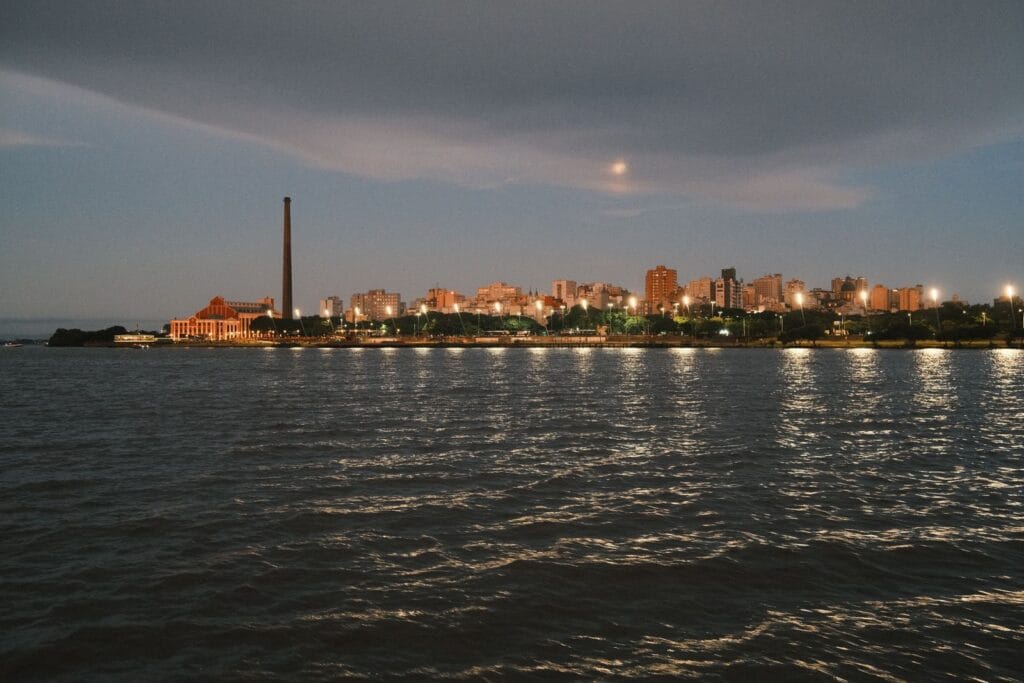
Asunción Paraguay evening illuminated cityscape

Why Paraguay Outperforms Other Nomad Destinations in a Cold Comparison

Put Paraguay alongside other popular nomad destinations \u2014 Georgia, Mexico, Portugal, Colombia, Thailand \u2014 and the differences are striking. The cost of living in Asunci\u00f3n ranks among the lowest in the region: a one-bedroom central apartment runs $300\u2013$500 per month, and overall living costs are well below any European capital. For someone earning in dollars or euros, this represents a genuine, measurable improvement in quality of life without sacrificing urban infrastructure.

The tax case is the strongest argument for those with clients outside Paraguay. Paraguay applies the territoriality principle: taxes apply only to income generated by economic activity performed within the national territory. A freelancer billing clients in Germany, the US, or the UK pays no Paraguayan income tax on those earnings. Paraguay\u2019s Personal Income Tax (IRP) and VAT only apply to economic activity carried out inside the country \u2014 so for those working entirely with foreign clients, the Paraguayan tax burden on that income is effectively zero.

Paraguay\u2019s macroeconomic stability is worth noting. It is a country with consistent GDP growth, historically low inflation for the region, and a stable exchange rate policy. The US dollar circulates normally alongside the guaran\u00ed, making operations straightforward for those with foreign currency income. Legal certainty is reasonable by regional standards \u2014 a relevant factor for anyone planning a medium- or long-term setup in the country.

Step-by-Step Residency Process: Documents and Realistic Timelines

Before traveling to Paraguay, get clear on which documents need an apostille in your home country. The criminal background check is the most time-sensitive: it must be recent \u2014 generally no older than three to six months at time of submission \u2014 apostilled by the appropriate authority in the issuing country, and translated into Spanish if not already in that language. For US citizens, the standard document is an FBI Identity History Summary; for UK nationals, a ACPO certificate; for most EU nationals, the equivalent national police record.

Civil status documents \u2014 birth certificate, marriage or divorce certificate if applicable \u2014 follow the same process: issuance by the civil registry, apostille, and translation if needed. It is essential to verify that all documents fall within the validity periods required by Paraguayan immigration authorities. Documents older than six months at submission may be rejected, forcing you to restart the process from your home country.

Once in Asunci\u00f3n, the process involves submitting the complete dossier to the Directorate General of Migration, paying the administrative fees, and in some cases attending a verification appointment. Working with a local immigration lawyer reduces errors, ensures documents meet current requirements, and meaningfully shortens processing time. A submission with deficiencies can add months to what should be a straightforward process.

Expat signing residency documents Paraguay

Paraguay\u2019s Territorial Tax System: How It Works in Practice

The territorial tax concept generates more questions than almost anything else about Paraguay, and when properly understood, it explains the country\u2019s appeal among freelancers and digital entrepreneurs. Unlike worldwide income systems \u2014 applied by Spain, Germany, France, or the United States \u2014 Paraguay\u2019s system taxes only income produced by economic activity carried out within the national territory.

For a freelancer providing services to clients headquartered outside Paraguay, those earnings do not constitute Paraguayan-source income and are not subject to the Personal Income Tax (IRP). The IRP, at a flat 10% rate, would only apply if the professional had Paraguayan clients or conducted economic activity within the local market. For those working entirely with foreign clients, the Paraguayan tax burden on that income is effectively zero.

The Registro \u00danico del Contribuyente (RUC) is Paraguay\u2019s tax identification number, equivalent to a US EIN or UK UTR. For resident freelancers who want to operate formally, obtaining a RUC and registering as a self-employed individual is the logical next step after securing residency. This is managed through the Subsecretariat of State for Taxation (SET). Invoicing in foreign currency \u2014 euros, dollars, pounds \u2014 is standard practice among resident freelancers providing services abroad.

Double taxation treaties deserve direct attention. Paraguay has agreements with a limited number of countries, far fewer than the US, UK, or most EU members. This does not eliminate the territorial benefits for most freelancers with foreign clients, but it does make it important to review your home-country situation with a tax advisor before making decisions \u2014 particularly regarding formally deregistering as a tax resident there.

Expat couple relaxing lifestyle Paraguay

How Many Days Do You Need to Spend in Paraguay to Keep Your Residency?

One of the most common questions from those evaluating Paraguay as a legal base is the minimum presence requirement. The direct answer: Paraguayan immigration law does not set a minimum number of days of physical presence to maintain temporary residency. There is no 183-day rule here, unlike many other countries.

This has an important practical implication: you can maintain Paraguayan temporary residency while traveling frequently or spending extended periods in other countries, without automatically losing your resident status in Paraguay. This flexibility sets Paraguayan residency apart from many European and Latin American alternatives, making it particularly attractive for those with high-mobility lifestyles or simultaneous bases in multiple countries.

The calculus changes if your goal is permanent residency or Paraguayan citizenship. While the law does not specify exact days, the migration authorities in practice consider actual presence in the country as evidence of genuine ties. Those aiming for citizenship \u2014 available after three years of permanent residency \u2014 typically document their time and activities in Paraguay systematically to demonstrate real connection with the country.

Living in Paraguay as a Remote Worker: The Reality That Matters

Asunci\u00f3n surprises those who arrive with neutral expectations. The central neighborhoods \u2014 Carmelitas, Villa Morra, the Aviadores del Chaco corridor \u2014 have workable infrastructure for remote professionals: fiber optic internet in most apartments, coworking spaces with solid connectivity, and caf\u00e9s set up for working. Outside those zones, connectivity can be more inconsistent \u2014 something to factor in when apartment hunting.

Paraguay\u2019s banking system is accessible to foreigners with legal residency, solving one of nomads\u2019 typical pain points: access to local financial services. With a Paraguayan ID and RUC, you can open accounts at major local banks \u2014 It\u00e1u Paraguay, Sudameris, Banco Continental \u2014 in both guaran\u00edes and US dollars. This simplifies operations for those who need a regional banking presence or want to receive international payments into a local account.

Private healthcare is affordable: a specialist consultation typically runs $20\u2013$50, and Asunci\u00f3n\u2019s reference private hospitals deliver an acceptable standard of care. Most expats opt for private health insurance, whose annual premiums are substantially lower than European or North American equivalents. The expat community in Asunci\u00f3n has grown considerably in recent years, making initial adaptation easier and giving newcomers access to practical, firsthand advice from people who have already navigated the same process.

Quiet residential street neighborhood

Take the Next Step: Paraguay Residency with Legal Support

If you\u2019re evaluating Paraguay as a legal and tax base, the first step is understanding exactly what you need and which options match your situation. At Legal Migration Paraguay, we specialize exclusively in migration and establishment processes in Paraguay, with direct experience serving freelancers, digital entrepreneurs, and professionals working with international clients. Contact us or review our temporary residency service to get started.

Frequently Asked Questions: Paraguay Residency and Remote Work

Do I need to be in Paraguay to start the residency application?

You can prepare most of the documentation from your home country. However, at some point you will need to be physically present in Paraguay to complete in-person requirements at the immigration office.

How long does the temporary residency process take?

With complete documentation, the process typically takes between four and eight weeks. Working with a local immigration lawyer generally reduces processing time and avoids delays.

Can I work for foreign clients while living in Paraguay?

Yes. Paraguayan residency does not restrict you from working for clients based outside the country. The territorial tax system means that income from foreign sources is not taxed in Paraguay.

What is the path from temporary to permanent residency?

Temporary residency is initially valid for two years and is renewable. After three years, you can apply for permanent residency, which has no expiration date and is the step before eligibility for Paraguayan citizenship.

Our related Articles

Scroll to Top